>>
GeForce cards run FP16/BF16 tensor maths with FP32 accumulate at half speed. Workstation cards on the same chips run it at full speed.
A firmware exploit flips two bits at boot to undo Nvidia's half-rate limit on GeForce tensor maths, doubling the RTX 4090's peak. It does nothing for games, and the RTX 5090 is locked even harder.

GeForce cards run FP16/BF16 tensor maths with FP32 accumulate at half speed. Workstation cards on the same chips run it at full speed.
Open-source tools led by Zagitta's gpu-unlock use a bug in Nvidia's signed Booter firmware to lift the limit at boot. No flashing needed.
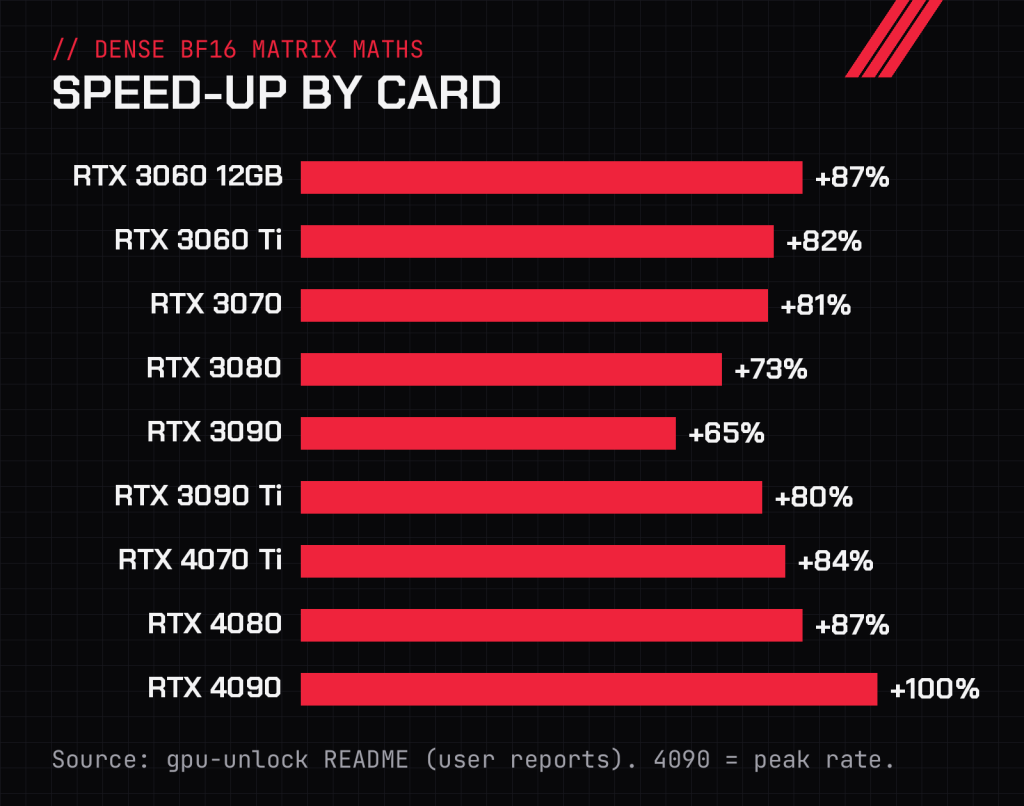
The RTX 4090's peak tensor rate doubles to about 330 TFLOPS, and the 3090 Ti gains up to 80% in BF16 maths. Real-world AI gains are smaller.
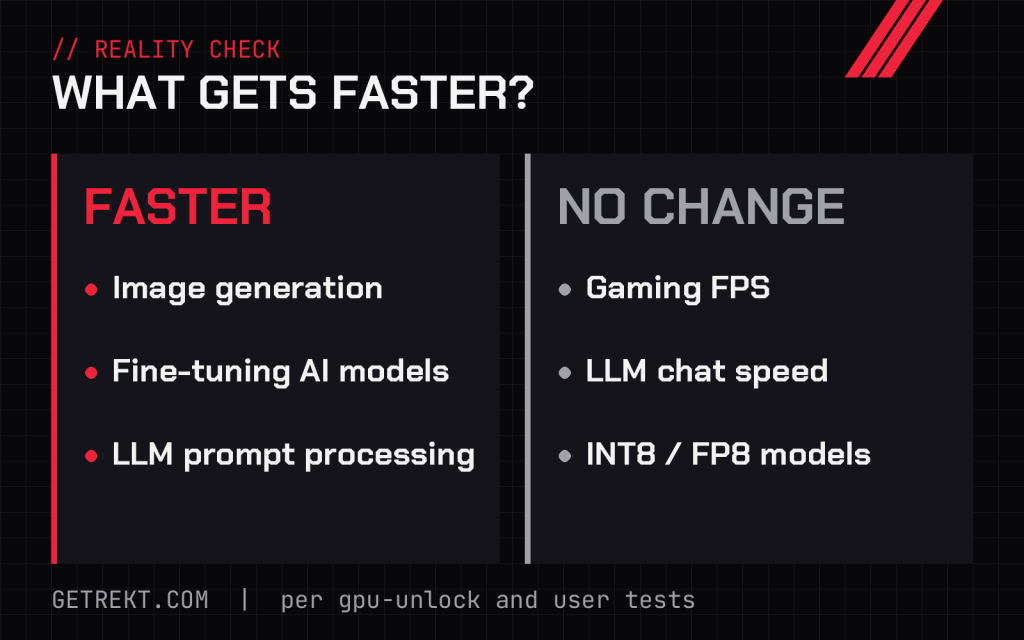
Gaming FPS and LLM chat speed don't change. Image generation, fine-tuning and prompt processing get faster.
The RTX 5090 has the same half-rate limit per Nvidia's specs, but Blackwell sets it in fuses behind a new security chip, so it can't be unlocked.
For years, Nvidia has sold you a GeForce card with part of its AI engine deliberately running at half speed. Now modders have found a way to switch the full speed back on. A chain of open-source projects has removed the throttle on RTX 20, 30 and 40-series cards, doubling the RTX 4090’s peak tensor rate and lifting the RTX 3090 Ti’s AI maths by up to 80 per cent.
No VBIOS flash, no soldering, no patched driver. It uses a bug in Nvidia’s own signed firmware to flip two bits at boot. And if you’ve just spent big on an RTX 5090, the answer to the obvious question is not what you want to hear: your card has the same limit, and right now nobody can take it off.
Every RTX card since the 20-series has tensor cores, the bits of the chip that do the matrix maths behind DLSS and pretty much all modern AI. They can do that maths in a few formats. When they multiply 16-bit numbers and add the results up in 16-bit, GeForce cards run at full speed. When they add the results up in more accurate 32-bit, which is what AI training and a lot of AI inference wants, GeForce cards run at exactly half speed.
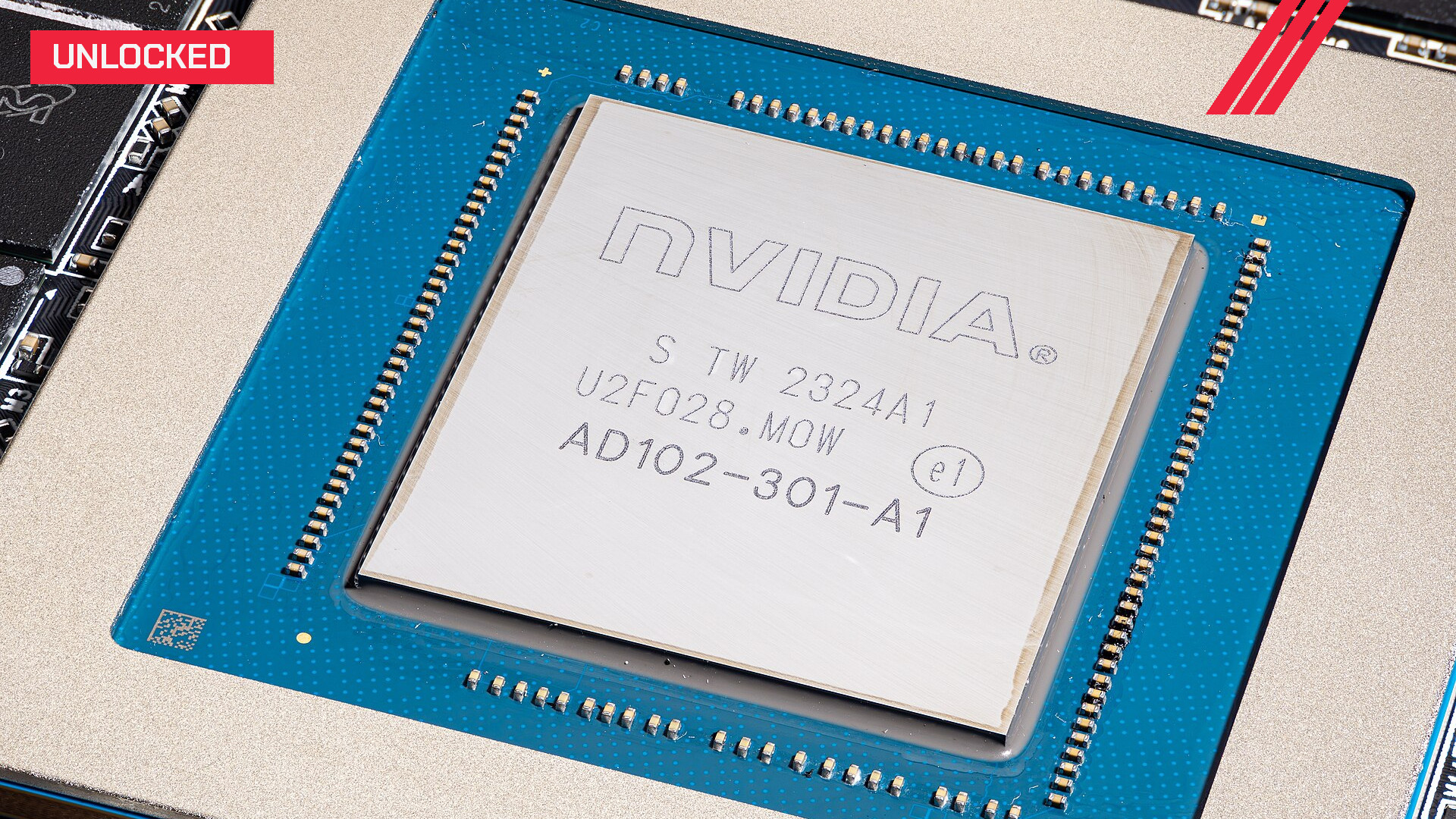
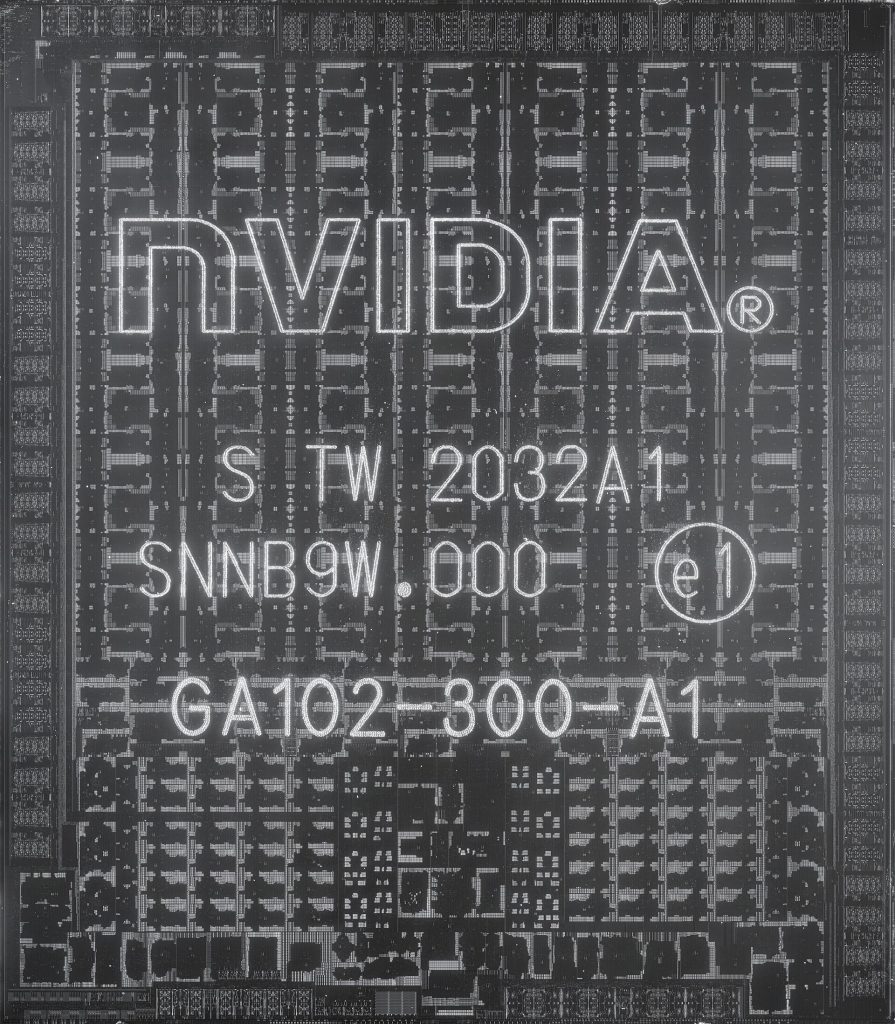
It’s not a hardware limitation, and Nvidia’s own spec sheets prove it. The company’s Ada whitepaper rates the RTX 4090 at 330.3 TFLOPS for FP16 with FP16 accumulate, and 165.2 TFLOPS with FP32 accumulate. The RTX 6000 Ada workstation card, built on the same AD102 chip, does 364 TFLOPS either way. Same story last generation: the RTX 3090 and the RTX A6000 are basically the same GA102 silicon, and only the workstation card gets the full FP32-accumulate rate. That’s market segmentation. Pay workstation prices, get the full chip.
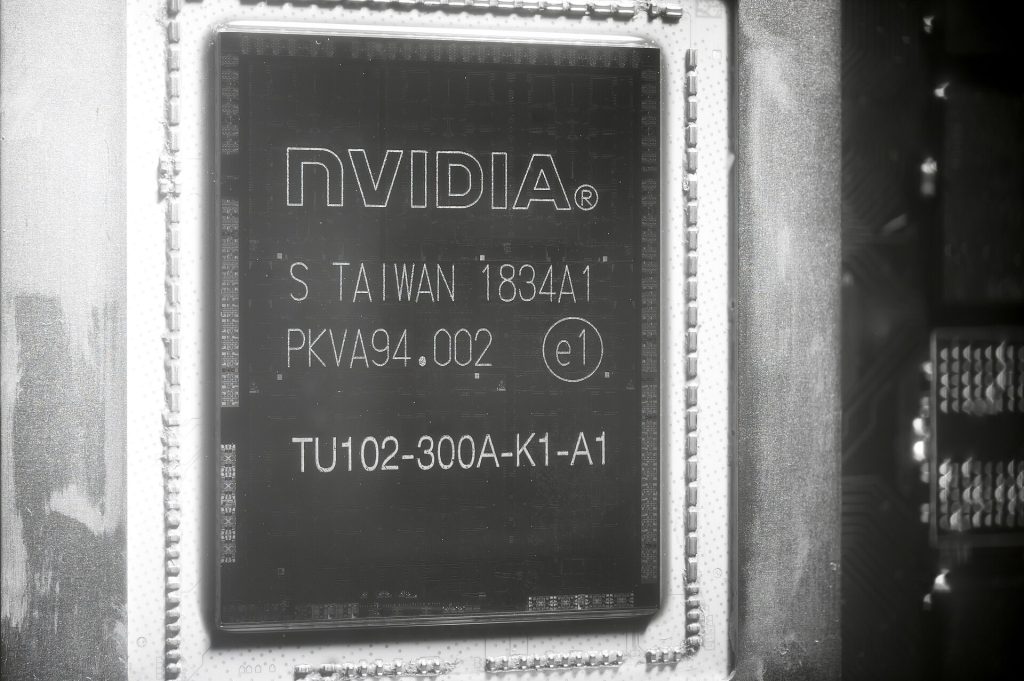
This didn’t come out of nowhere. Earlier this year, people tinkering with Nvidia’s CMP 170HX, a crypto-mining card, worked out an exploit in “Booter”, a piece of Nvidia-signed firmware that runs on a security microcontroller inside the GPU. Nvidia had published a debug version of Booter encrypted with a public test key, and that gave researchers a way in. A bug in its signature-checking code lets an attacker overwrite its stack and make one write with the chip’s highest privilege level. One write is all it takes to unlock the registers that set the tensor speed.
In October, developer Zagitta wrapped that into gpu-unlock, a Linux kernel module that went viral on Hacker News and has racked up around 14,500 GitHub stars. It started with Ampere, and version 2.0 added Turing and Ada with help from forks like JustAResearcher’s gpu-unlock-ada and nlzy’s turing-unlock. Zagitta has been upfront that the exploits aren’t his ideas, saying on Hacker News that the project is “just a way to wrap the whole thing up in a much less annoying package than having to patch the nvidia driver.”
One warning from Zagitta himself: the project has no website, no installer and no crypto coin. Anything claiming otherwise, especially a random Windows installer, isn’t from him. Treat it like malware until proven otherwise.
Here’s where you need to read the fine print. The headline figures come from the projects’ own testing and user reports. Nobody has lab-tested this independently yet.
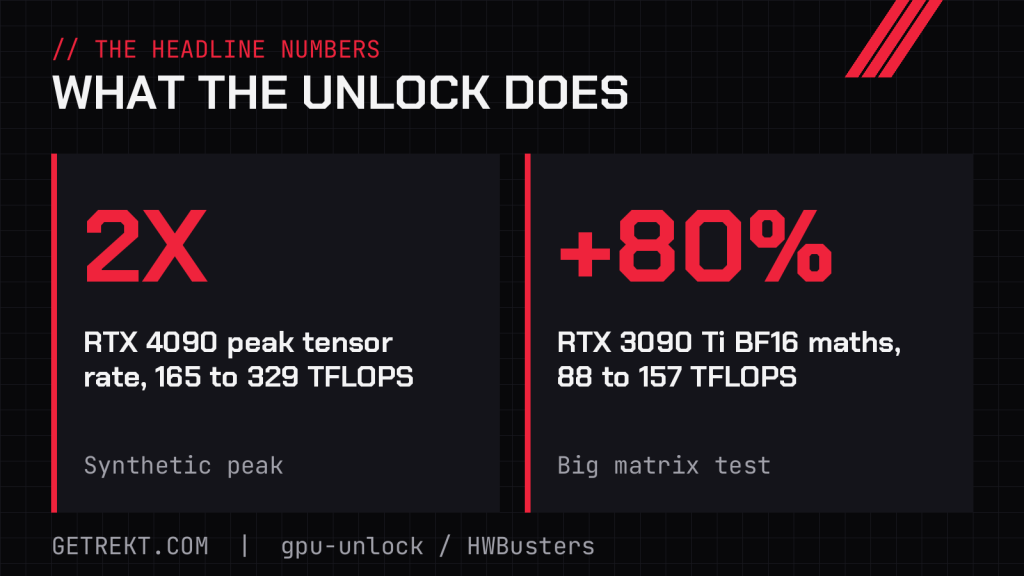
According to the gpu-unlock-ada README, the RTX 4090’s FP16 with FP32 accumulate rate goes from 165.6 to 331.6 TFLOPS. But that’s a synthetic peak. In real matrix maths through Nvidia’s cuBLAS library, the 4090 only gained about 12 to 34 per cent, because it hits its power limit before its tensor cores max out. The unlocked card drew more power too, about 346W against 313W.
Ampere is where it really shines. HWBusters reported an RTX 3090 Ti going from 87.5 to 157.4 TFLOPS in a big BF16 matrix test, an 80 per cent jump, and a ComfyUI image job dropping from 72 seconds to 45. Zagitta’s README has the full spread:
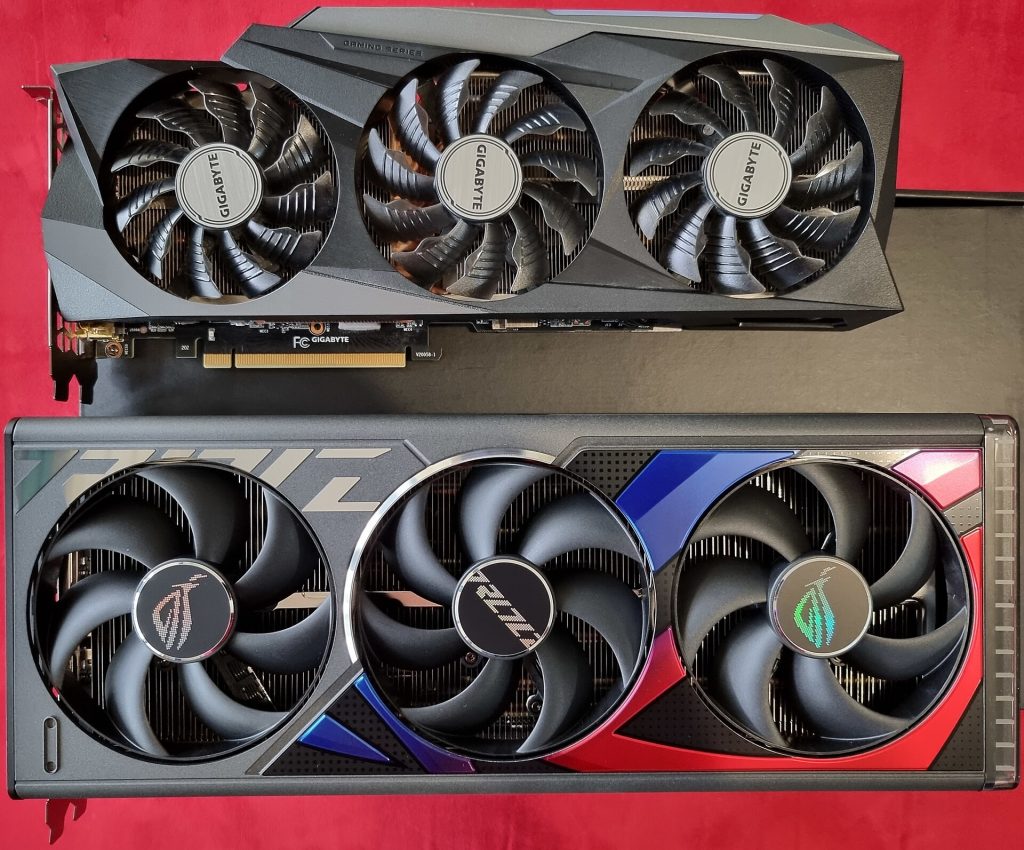
The RTX 20-series is still experimental. On an RTX 2080 Ti, nlzy’s turing-unlock measured FP16 matrix maths going from roughly 53 to between 78 and 91 TFLOPS depending on the size of the job. Turing doesn’t support BF16 at all, so FP16 is all it gets.
If you just play games, sorry: nothing. The unlock doesn’t touch FP32 shader maths, memory bandwidth or VRAM, so expect no change to frame rates. DLSS runs on tensor cores so a tiny benefit is possible in theory, but nobody has shown one.
It’s local AI that benefits, and only certain kinds. Zagitta’s README, based on user reports, claims 25 to 55 per cent faster LLM prompt processing (“prefill”), 25 to 50 per cent faster fine-tuning and 30 to 55 per cent faster Stable Diffusion-style image generation. The bit people actually watch, the speed an LLM spits out words, doesn’t move at all, because that’s limited by memory bandwidth, not maths. Same for quantised INT8, INT4 and FP8 models, according to the README.
Independent checks are more modest. One RTX 3090 owner quoted by Notebookcheck saw about 16 per cent faster long-context prefill with generation unchanged. Others on VRAM Calculator measured around 10 per cent prefill gains and flat generation speed.
This is the big one. Short answer: the RTX 5090 is throttled exactly the same way, and this hack can’t fix it.
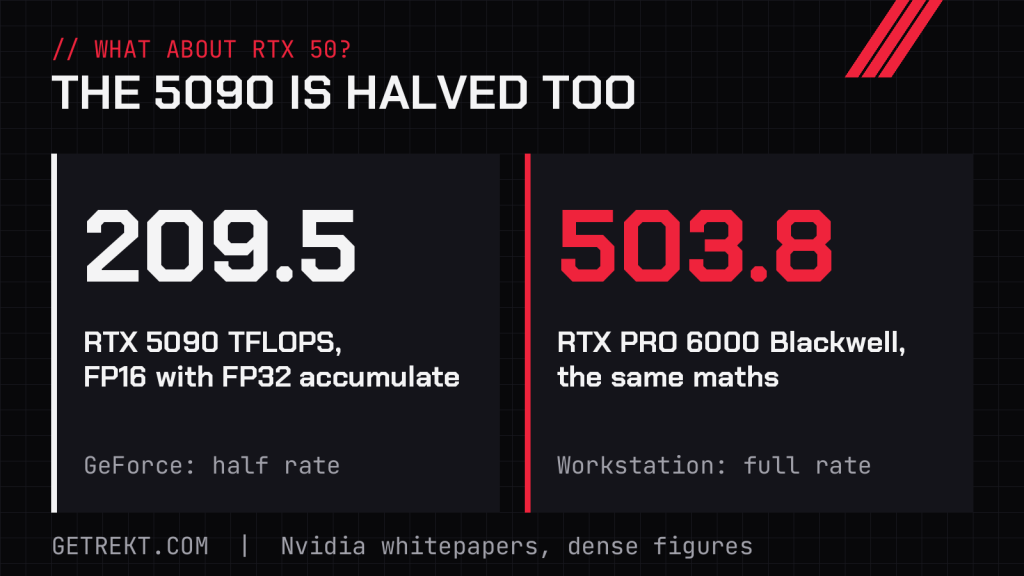
Nvidia’s own RTX Blackwell whitepaper rates the RTX 5090 at 419 TFLOPS for FP16 with FP16 accumulate, and exactly half that, 209.5 TFLOPS, with FP32 accumulate. The RTX PRO 6000 Blackwell workstation card does 503.8 TFLOPS either way. The gap in regular FP16 between the two cards lines up with the PRO having more cores and higher clocks. The 2.4x gap in FP32 accumulate is the throttle.
When someone asked whether the Ada unlock would work on a 5090, JustAResearcher closed the GitHub issue as not planned: “The short answer is no. On Blackwell the same registers are there, but host writes to them are dropped, the rate comes from fuses, and there’s no published SEC2 booter for an Ada-style payload to run in.”
You might see posts on X claiming 420-plus TFLOPS from an unlocked 5090. Hong Kong tech site unwire.hk called that speculation, and we haven’t seen any evidence it’s real either. A Blackwell unlock would need a whole new bug in Nvidia’s newer security hardware. That could turn up one day, but it doesn’t exist yet.
So what does that mean if you own a 50-series card? For gaming, nothing. You never had access to that speed in games anyway. For local AI, you’re stuck at half rate for FP32-accumulate work, and here’s the awkward bit: on paper, an unlocked RTX 4090’s peak of about 330 TFLOPS beats a stock 5090’s 209.5 in that specific maths. In practice the 4090 runs into its power limit, and the 5090 still wins on memory bandwidth, VRAM, FP8 and FP4, which is what a lot of modern AI actually uses. But it’s not a great look when a two-generation-old card can out-muscle Nvidia’s flagship on any AI benchmark just because a modder flipped two bits.
It also tells you Nvidia saw this coming. Moving the speed setting into fuses behind a brand new security chip is exactly what you’d do if you never wanted a register write to undo your product segmentation again.
Nvidia has a long history of selling one chip and locking bits of it depending on the price tag, and the community has a long history of picking those locks.
Used RTX 3090s are already a favourite for running AI at home because of their 24GB of VRAM, and this makes them better at prompt processing, image generation and fine-tuning for free. If you’ve got an old 30 or 40-series card in a drawer or a second rig, it just became more useful. We haven’t seen any evidence yet that the unlock has pushed up used prices, so if you’re buying or selling on Trade Me or Marketplace, check recent sold listings rather than trusting the hype.
It also makes the RTX 50-series a harder sell for the AI crowd. With 5090s already scarce and marked up well past RRP, an unlockable 3090 or 4090 looks a lot more tempting if local AI is part of why you’re upgrading.
Nvidia will tell you this is normal product segmentation, and sure, every company charges more for pro features. But this isn’t a missing feature. It’s the same silicon, doing the same maths, deliberately running at half speed because you bought the gaming version. Then a hobbyist with a kernel module turned the full speed back on in a weekend. That says everything about how “real” the limit was.
Be realistic, though. Gamers get nothing out of this, the eye-popping 2x figure is a synthetic peak, and real-world LLM chat speed doesn’t budge. It’s a genuine win for people doing image generation, fine-tuning and long-prompt work on older cards. And the 5090 news is the sting in the tail: Nvidia clearly saw this coming and locked Blackwell down with fuses and a new security chip. Your shiny flagship has the same handbrake, and this time it’s welded on. Running the unlock, or reckon Nvidia will patch it? Tell us in the comments or in the GetRekt Discord.

The OpenAI boss reckons memory sitting in home PCs is a "quite terrible" use of scarce supply that belongs in the cloud. Gamers paying record prices f...
Xbox's first ever COO left after three months, and an anonymous source said she was sacked. The 21-year Microsoft veteran says that's not accurate. Mi...
Neishin's giant Cyberpunk 2077 modlist gets a 4.0 trailer with 1.2 million views, path-traced rainy streets, 250+ vehicles and new quests. It lands in...
Comments 0
Quick check before we post that