>>
The New York Times reports US officials believe a senior Megaspeed executive cultivated Nvidia CEO Jensen Huang to pass information to Beijing.
According to The New York Times, US intelligence believes an executive at one of Nvidia's biggest Asian customers got close to Jensen Huang to feed information to Beijing. Trump was reportedly told a year ago and did nothing.

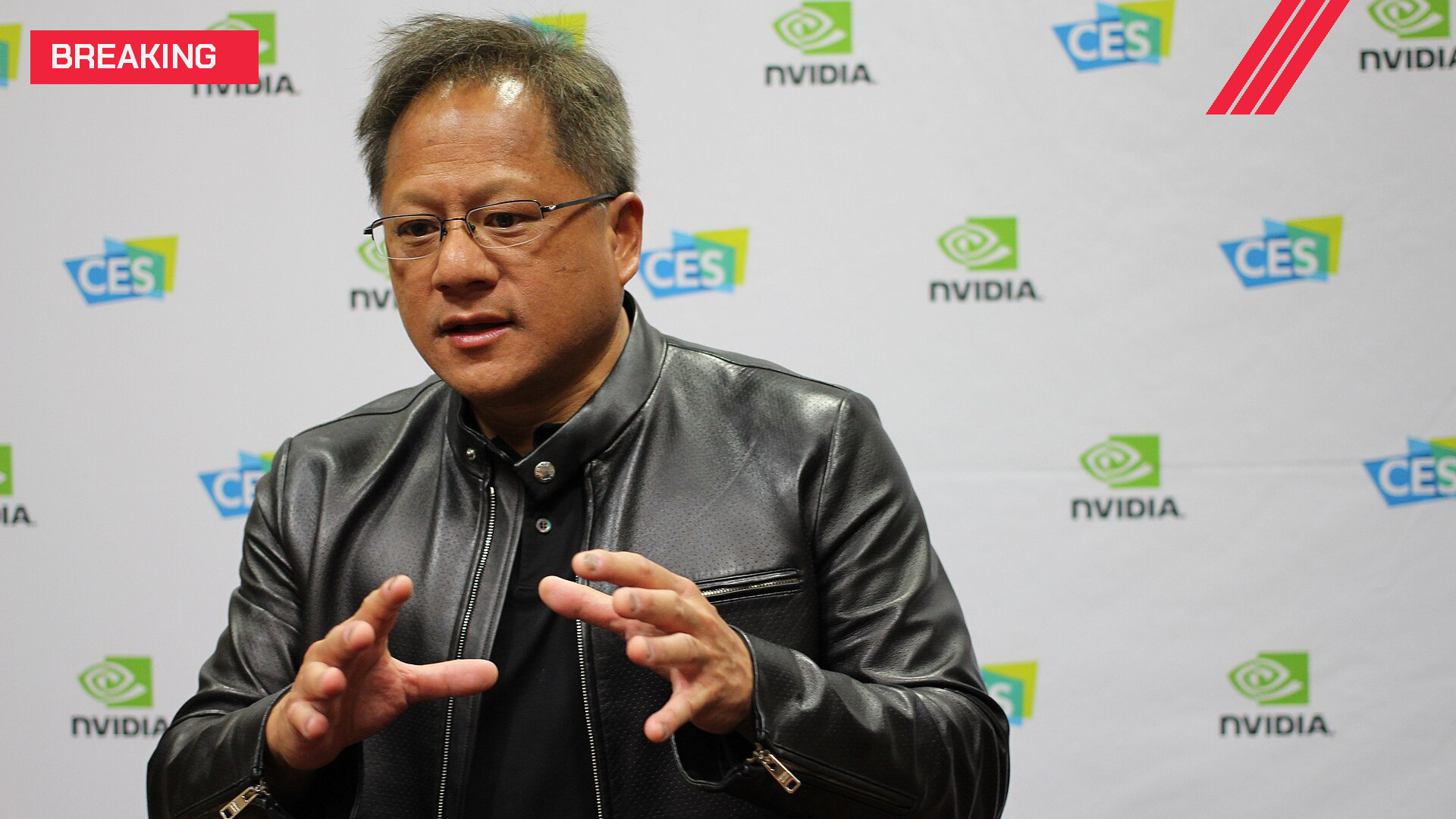
The New York Times reports US officials believe a senior Megaspeed executive cultivated Nvidia CEO Jensen Huang to pass information to Beijing.
Trump was reportedly briefed about a year ago and didn't act. Officials say some probes into Nvidia chips reaching China have stalled.
Nvidia says Huang's contact with the executive was "not unusual or unexpected". Megaspeed has hired outside lawyers to investigate.
Megaspeed began as an offshoot of Chinese games company 7Road and is accused of funnelling billions in Nvidia hardware toward China.
Nobody has been charged, Huang isn't accused of wrongdoing, and the Times story is paywalled, so details come via other outlets.
The bloke who sells you your graphics card may have had a Chinese intelligence asset in his circle, and the White House reportedly knew about it for a year. The New York Times reported on Wednesday, US time, that American officials believe a senior executive at Megaspeed, a Singapore data centre company and one of Nvidia’s biggest customers in Southeast Asia, built a close relationship with Jensen Huang so she could pass information back to Beijing.
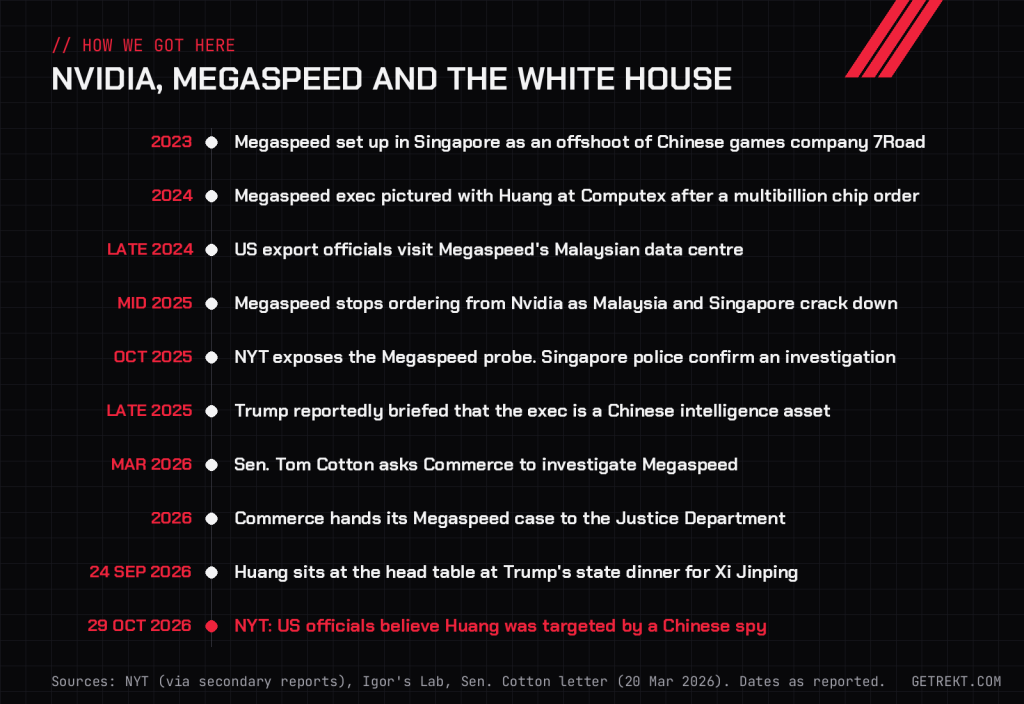
The bigger bombshell is what happened next: nothing. According to the Times, Donald Trump was briefed on the intelligence about a year ago and chose not to act. Since then, Huang has flown to Beijing with Trump and sat at the head table at his state dinner for Xi Jinping.
A heads-up on how we got this: the Times story is paywalled and we couldn’t read it directly. Everything below that’s attributed to the Times comes from its reporting as relayed by several other outlets, plus older public records on Megaspeed. Nobody has been charged with spying, and we’re not naming the executive.
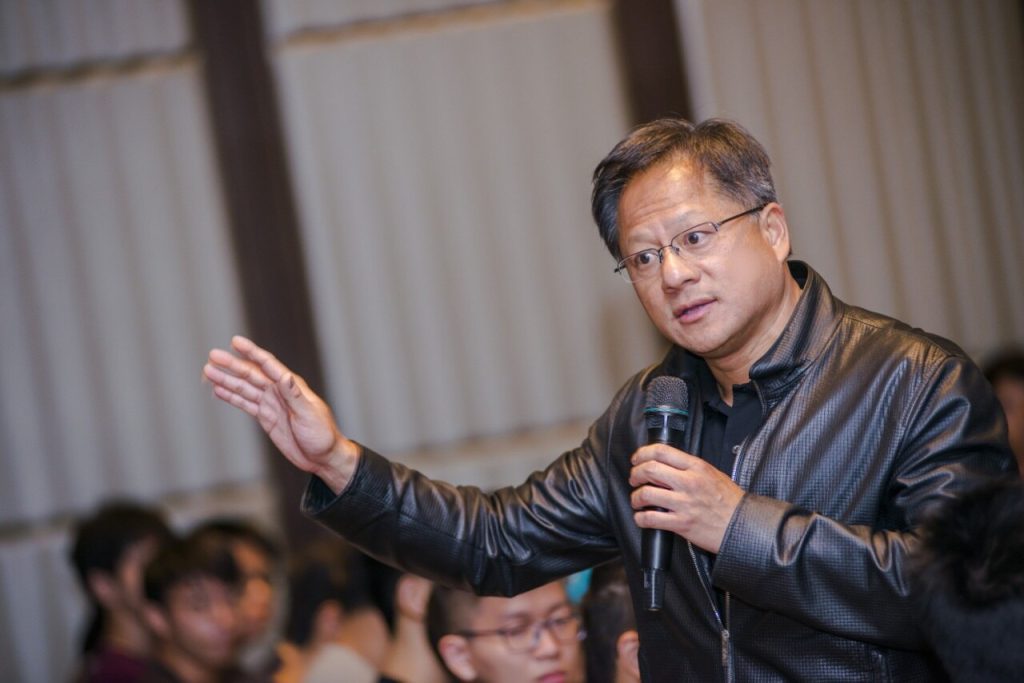
Nvidia isn’t panicking, publicly at least. A spokesman told the Times that Huang’s dealings with the executive were “not unusual or unexpected”, that meeting customers is literally his job, and that Nvidia expects the government would warn it about any threat. The company says it follows the law, has found no evidence of smuggling, and still lists Megaspeed as a cloud partner.
Megaspeed says it’s taking the allegations seriously and has hired outside lawyers to run an internal investigation. It says it only ever got ordinary business information from Nvidia, not trade secrets. We haven’t seen an on-record response from the White House or Beijing yet.
Here’s the bit that lands on our turf. When the Times first exposed Megaspeed in October 2025, it reported the company was set up in Singapore in 2023 as an offshoot of 7Road, a Chinese games and cloud company with state-backed investors. 7Road is best known in gaming for browser and mobile games like DDTank and Wartune. So a games company spin-off went on to become Nvidia’s biggest customer in the region.
That earlier reporting alleged Megaspeed bought about US$2 billion of Nvidia hardware and ran it through data centres in Malaysia and Indonesia under the Speedmatrix name, giving Chinese customers access to chips they’re banned from buying, or moving the hardware into China outright. US export officials who visited the Malaysian site in late 2024 reportedly found sealed Nvidia servers, which looked a lot like gear waiting to be shipped somewhere else. Megaspeed stopped ordering from Nvidia in mid-2025 once Malaysia and Singapore started cracking down, and Singapore police confirmed an investigation.
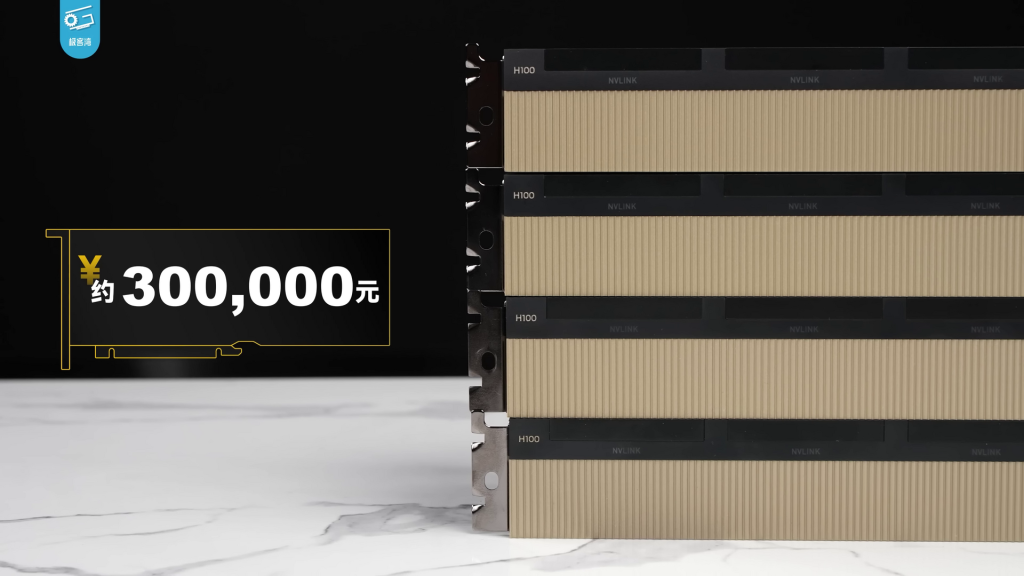
It didn’t go away. Senator Tom Cotton wrote to Commerce Secretary Howard Lutnick in March asking for an investigation into Megaspeed’s ownership and ties to US chip companies. The Times now reports that trade records show Megaspeed’s Malaysian sister company bought at least US$4.8 billion of AI equipment containing Nvidia chips between June 2024 and February 2026, and that Commerce has since handed its case to the Justice Department.
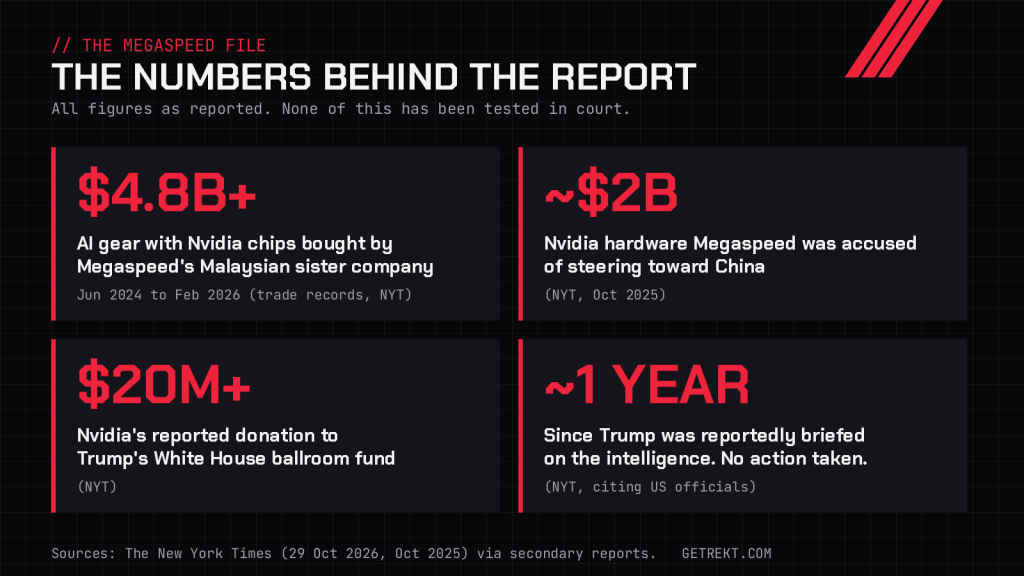
Follow the money. Nvidia is one of the most valuable companies on the planet, worth around US$5 trillion, and its revenue more than doubled to US$96.2 billion in its latest quarter. It’s doing a lot of the heavy lifting for the US stock market right now. According to the Times, it’s also given at least US$20 million to Trump’s White House ballroom fund.
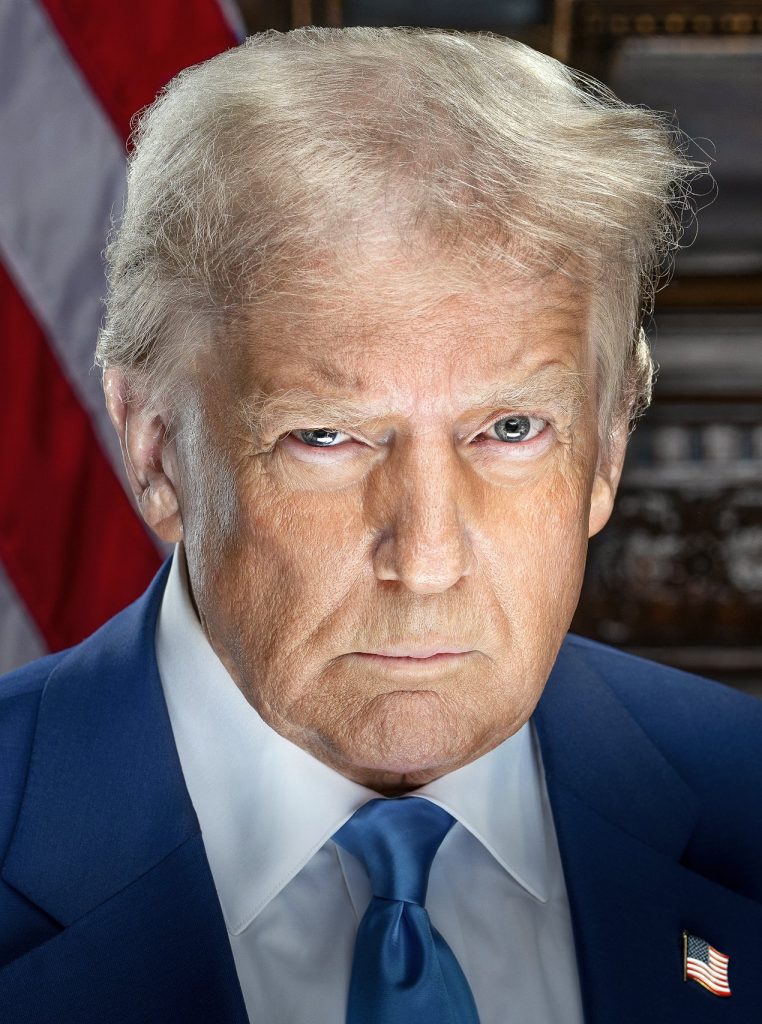
Huang and Trump are tight. Trump personally called Huang to bring him on the May trip to Beijing, Huang has said the President rings him late at night, and he was at the head table for the Xi Jinping state dinner on 24 September. Over that time Nvidia won licences to sell some H200 chips to China, with Washington taking a 25 per cent cut. Beijing has mostly refused to let its companies buy them anyway.
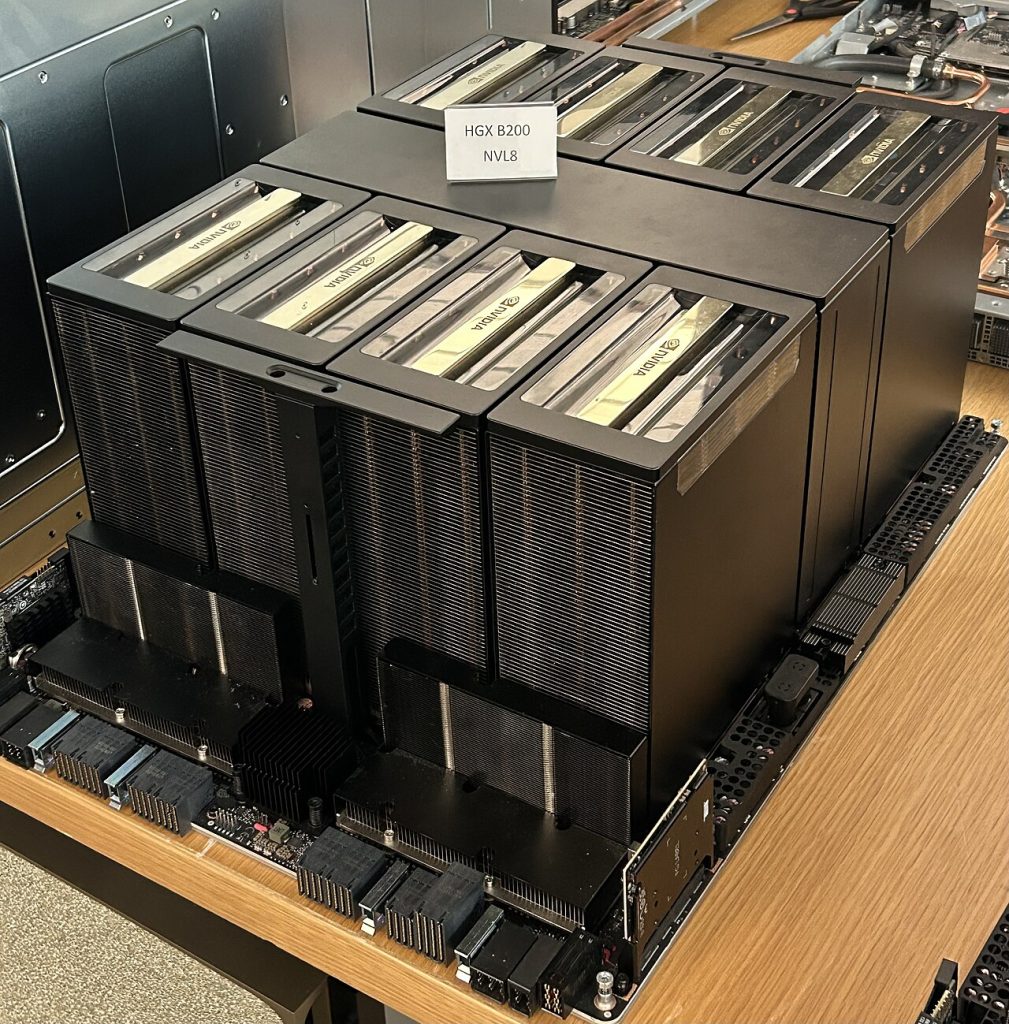
Nvidia is GeForce. The company at the centre of a spy story is the same one deciding how many graphics cards get made and what they cost. And the China fight is playing out on hardware that’s much closer to your PC than an H100.
Chinese giants ByteDance, Alibaba and Tencent have reportedly ordered more than US$35 billion worth of the RTX PRO 5500, a workstation card from the same Blackwell family as the RTX 50-series in your rig. Reports say Chinese orders top 6 million cards when Nvidia might only make around 3 million of them worldwide next year. Every wafer that goes to AI customers is one that isn’t going into gaming cards, and we’ve already watched AI demand drag GPU and RAM prices up. If the US clamps down, or doesn’t, it ripples straight through to what we pay here in NZ and Australia.
Let’s be clear about what this is: anonymous US officials, relayed through a paywalled report, about an alleged spy who hasn’t been charged. Nobody is saying Huang did anything wrong, and Nvidia’s line that a CEO meets his biggest customers all the time is fair enough on its face.
But the rest of it stinks. If the Times has it right, the US government decided a Chinese intelligence asset was cosying up to the boss of its most strategically important tech company, didn’t tell him, didn’t act, and let investigations stall because the share price and a trade deal mattered more. Meanwhile, Washington keeps telling everyone that AI chips are a national security issue. You can’t have it both ways. Either the chips matter or they don’t, and right now it looks like the answer depends on who’s on the phone to the Oval Office at midnight.
Expect follow-ups: a White House response, Congress piling in, and probably questions for Huang at Nvidia’s next earnings call. We’ll update as it moves. Reckon this is a scandal or a beat-up? Tell us in the comments, or argue about it in the GetRekt Discord.
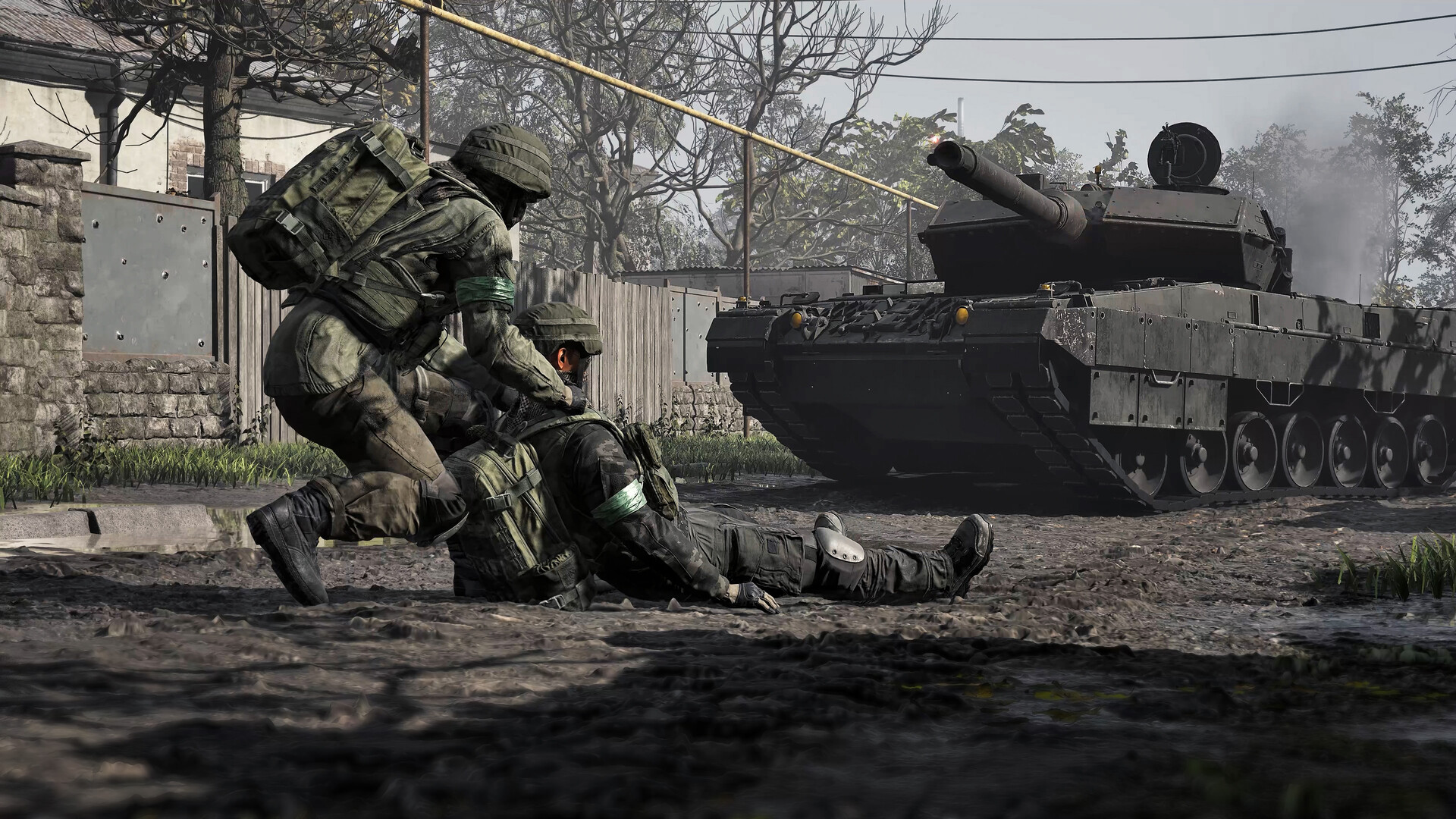
In its first three weeks of early access, Bulkhead's NZ$63 shooter out-earned EA Sports FC 27 and Fortnite on PC. Here's what Newzoo's September chart...
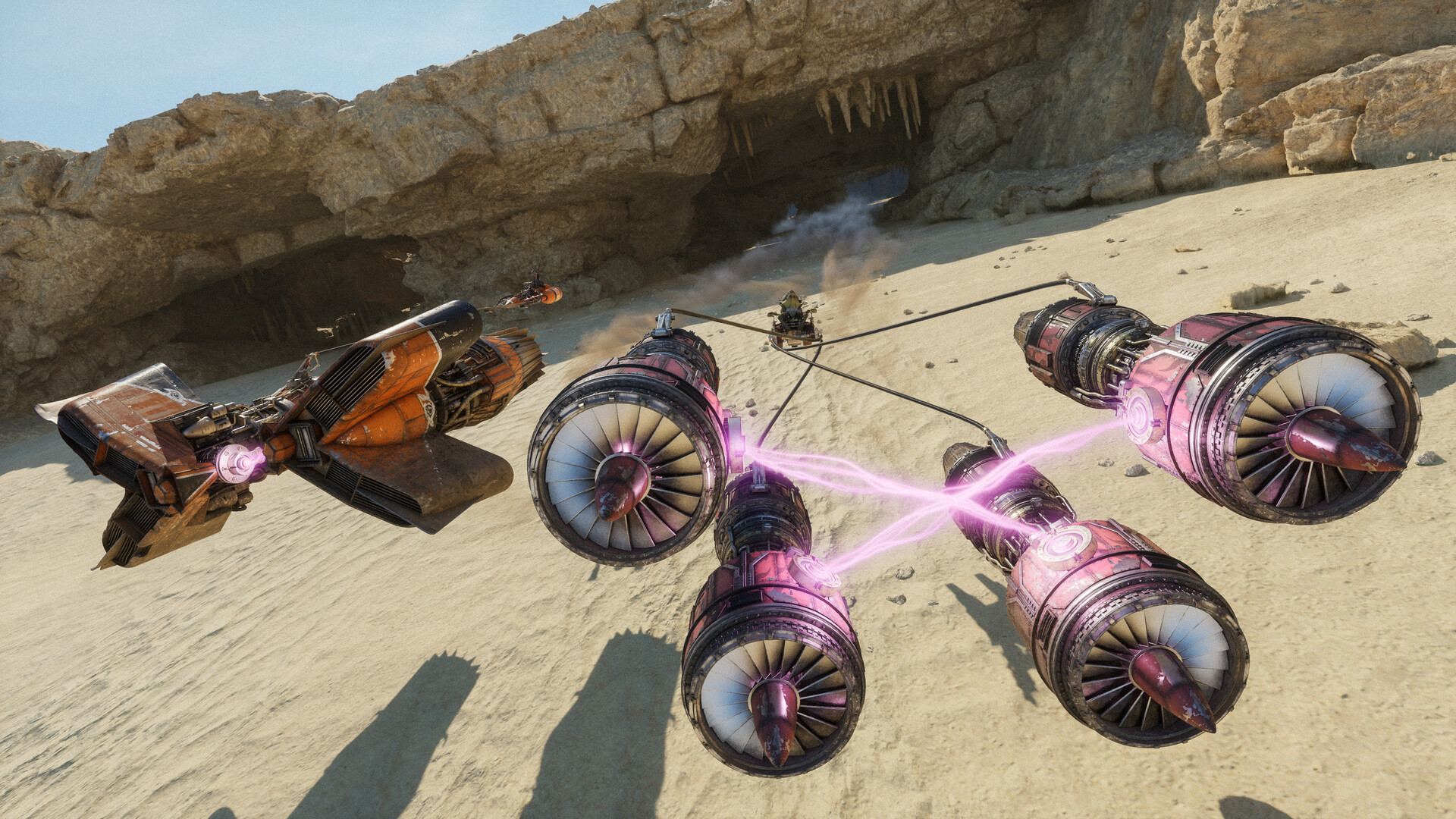
A podracing roguelite from ex-Burnout developers is one of the best-reviewed Star Wars games ever made. Its new accolades trailer is shouting about it...
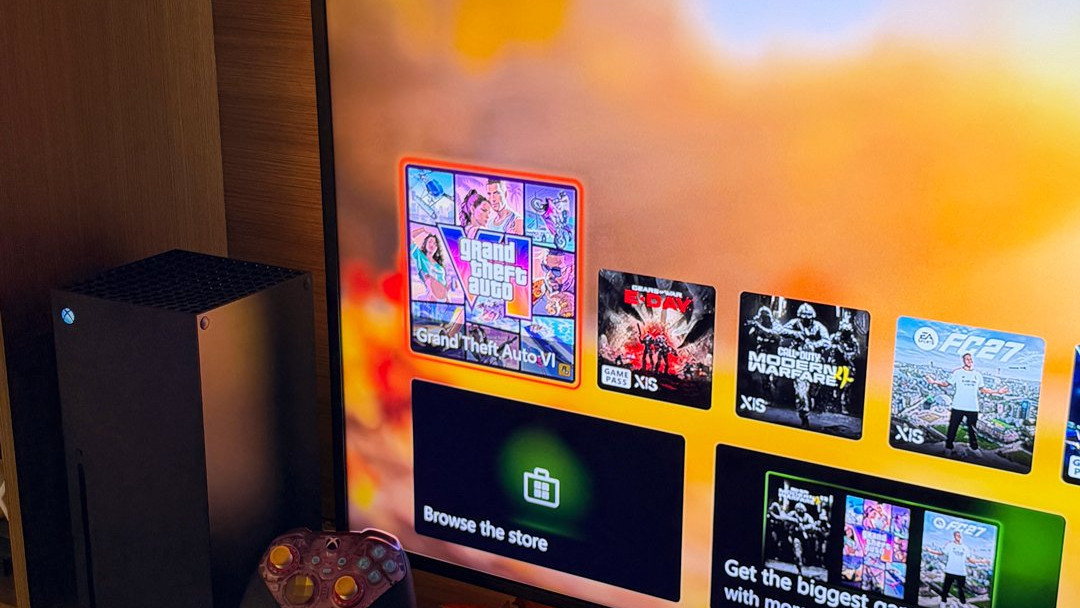
Xbox posted a cosy autumn setup with Grand Theft Auto VI front and centre on a Series X dashboard. Three weeks out from launch, fans want to know if M...
Comments 0
Quick check before we post that